Hotels & Resorts
Reliable distilled water and solar-heated water for guest rooms, kitchens, laundry, wellness areas, and daily hospitality operations.
Evacuated glass tubes have been used for decades mainly for heating water. Our solar distillation technology greatly extends their value by using captured solar heat to produce distilled water while also delivering useful hot water—transforming a proven solar thermal component into a remarkable new way to produce high-purity drinking water right at your fingertips.
One solar thermal system produces two valuable outputs: high-purity distilled water and useful hot water for daily needs. Most importantly, clean drinking water addresses one of the most essential needs of human life. Water is the source of life. Purity is its destiny.
Solar heat converts water into high-temperature steam during the distillation process. The thermal process helps destroy bacteria and other heat-sensitive microorganisms, while distillation separates water vapor from salts and many non-volatile impurities.
The purification process of solar distillation relies on the height of the steam chamber to provide sufficient vapor-separation distance, rather than on multiple filters or RO membranes. As a result, it eliminates multi-stage filtration systems and the regular replacement of filters and RO membranes.
Because solar distillation does not rely on RO membranes for purification, it does not require antiscalant chemicals normally used to protect membranes against mineral scaling.
Using direct solar heat for water purification reduces dependence on electricity and fuel for thermal energy. This opens a pathway to expand water purification and desalination while reducing the associated conventional-energy demand and greenhouse-gas emissions.
Solar distillation water heaters make it possible to produce clean water close to where it is needed, including homes, farms, villas, hotels, islands, remote communities and other decentralized locations.
For extremely cold climates, an optional electric heater provides freeze protection. Heating starts automatically when the tank water temperature falls to about 6°C and stops when it rises to about 10°C. Because the evacuated tubes of solar distillation water heaters are installed inverted above the tank, heated water naturally rises and accumulates inside the tubes, allowing the water in the tubes to remain relatively warmer. Compared with conventional solar water heaters, where the evacuated tubes are positioned below the tank, this design provides superior freeze protection for the tubes and the entire system.
Daily distilled water production naturally varies with sunlight intensity, allowing users to directly observe system operation and purified water output in real time while making abnormal water flow or leakage easier to detect.
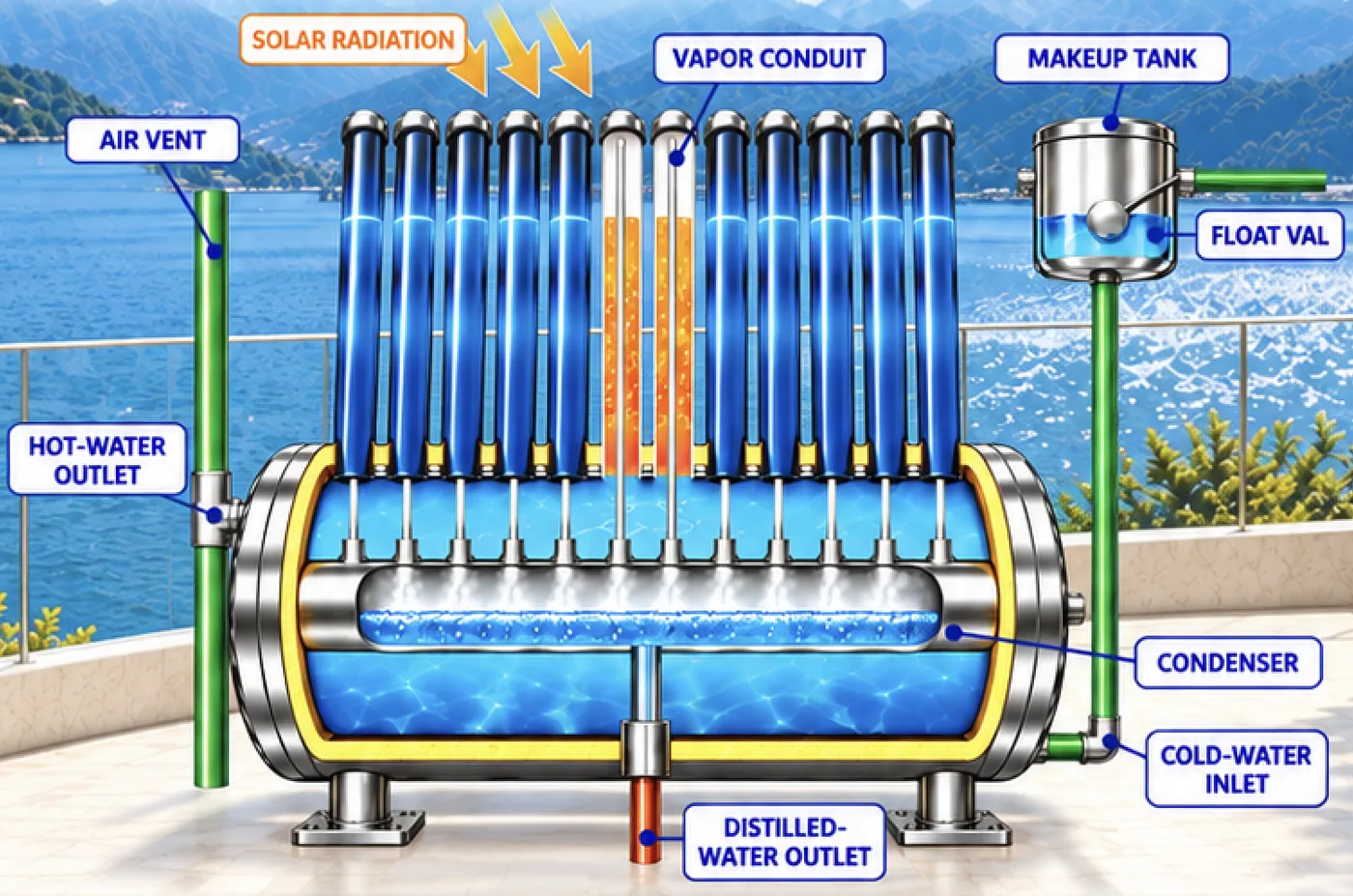
Captured solar energy is repeatedly utilized through two thermal processes: first, water is heated directly inside the evacuated glass tubes to generate steam for distillation; second, the heat released when the steam condenses is recovered to heat water again. This two-stage utilization cycle repeats continuously during operation, substantially increasing the overall utilization of solar energy.
Solar distillation technology brings water purification to its purest level using solar energy as the primary energy source. It provides a pathway to greatly expand water purification and desalination with far less dependence on conventional energy. In contrast, conventional desalination consumes substantial energy and precious resources, increasing energy demand and the associated burden of greenhouse-gas emissions and global warming.
The core heating, evaporation and condensation processes are driven directly by solar thermal energy. Electricity or fuel is not required to provide the heat for the core distillation process.
As hot water is used each day, concentrated contaminants and dissolved minerals are continuously discharged with the outgoing hot water, while fresh feed water enters the system. This daily water replacement naturally flushes and dilutes accumulated contaminants, creating an automatic self-cleaning effect during normal operation.
Solar distillation technology can be configured for challenging water sources including brackish water and seawater, providing a solar-driven pathway for decentralized desalination.
The core solar distillation system operates passively, with no motor, pump, electric controls, or other moving mechanical parts. With no filters or RO membranes, the simple static structure reduces maintenance requirements and supports reliable long-term operation.
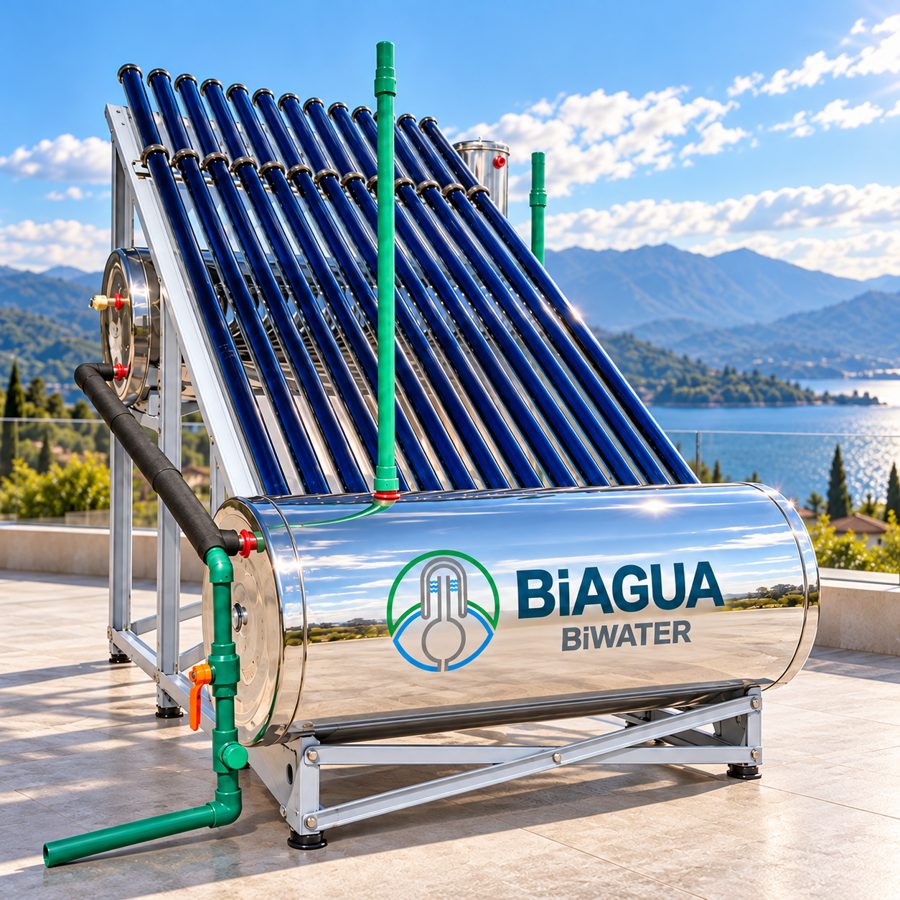
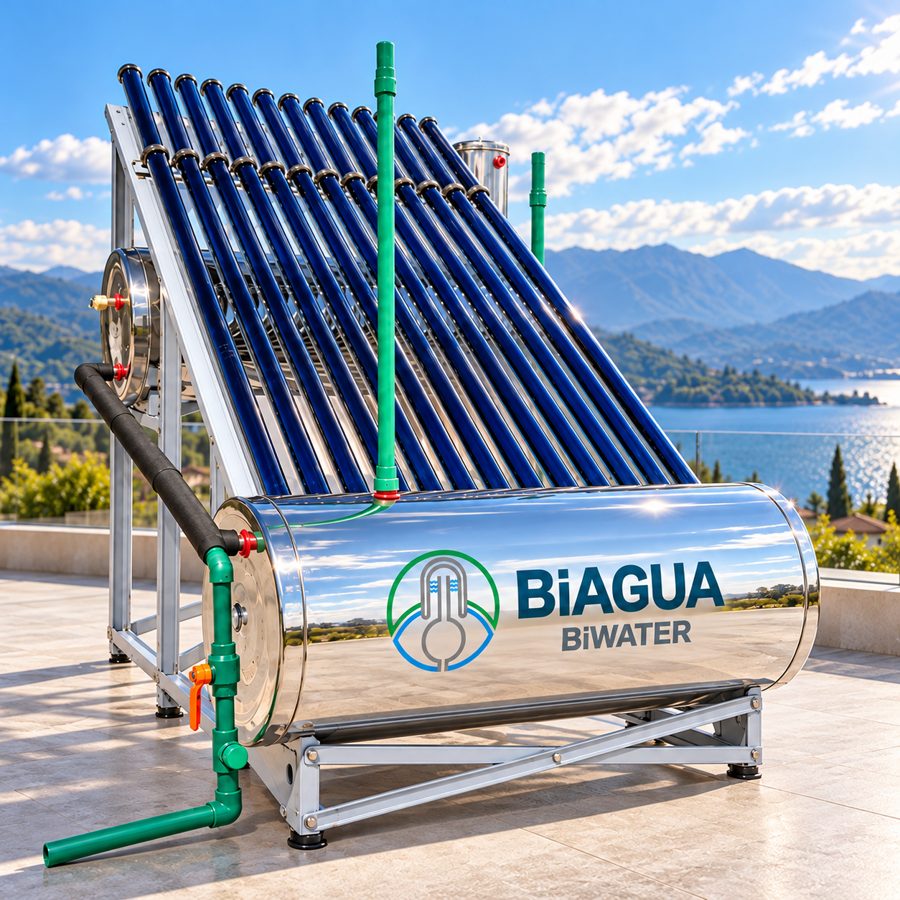
BiAGUA turns sunlight into two everyday essentials: distilled drinking water and domestic hot water. Its ingeniously simple passive technology uses solar heat to produce distilled water, then recovers the heat released during condensation to heat water for household use.
The same collected solar heat serves two purposes in sequence—bringing greater value to sunlight and making daily distilled-water production more economical.
BiAGUA uses freely available sunlight to produce distilled water at home while providing useful domestic hot water.
Its core purification process requires no electricity, motors, pumps, filter cartridges, RO membranes, or antiscaling chemicals. This passive design reduces ongoing energy and consumable expenses, while home production helps reduce spending on purchased drinking water and deliveries.
Powered by sunlight alone, BiAGUA makes a personal solar distillation plant affordable and accessible to ordinary families—enabling them to produce consistently high-purity drinking water at home.
Glass and stainless steel form BiAGUA’s main distillation path, reducing contact between water and plastic components.
Producing drinking water at home also helps reduce purchases of bottled water and large water containers, along with the plastic packaging, transport, and deliveries they require.
With inverted evacuated glass tubes and an ingenious passive design, BiAGUA separates and collects water through evaporation and condensation. Its purification capability does not depend on the remaining capacity of a filter cartridge.
Under suitable sunlight and feedwater conditions, with normal maintenance, BiAGUA can continue producing distilled-quality pure water while recovering condensation heat to provide domestic hot water—reducing the need for external energy in both purification and heating.
BiAGUA brings water production closer to the people who use it. Families can use the sunlight available at home to produce distilled drinking water and hot water, reducing dependence on outside supplies and recurring purchases.
More than a solar water heater, BiAGUA offers a practical way to make high-purity water an affordable part of everyday family life.
Hotter, lower-density water is intentionally maintained above colder, higher-density water. This stable thermal stratification strongly suppresses vertical circulation and mixing within the connected water body, reducing downward heat transfer and retaining absorbed solar heat in the upper evaporation zone.
The same solar energy is reused twice: first for vapor generation and again through internal condensation heat recovery for hot water heating.
Solar heating, vapor generation, vapor transfer, condensation, heat recovery, distilled water production, and hot-water storage are integrated within one connected water body through coordinated passive thermodynamic behavior.
Solar BiWater concentrates solar energy within evacuated glass tubes instead of continuously dispersing heat into a large bulk water mass, enabling faster and more efficient vapor generation.
Dedicated internal conduits collect and transfer vapor directly from the highest-temperature region without external vapor piping, pumps, valves, or complicated vapor collection structures.
Uses atmospheric pressure balance, gravity, and hydrostatic connection to naturally stabilize internal water levels without active pressure-control systems.
Moving vapor inside the conduits transfers heat into surrounding water, promoting additional localized vapor generation and improving thermal utilization efficiency.
Most thermal processes occur inside only evacuated glass vacuum tubes and a polyurethane-insulated water tank, greatly reducing heat loss and mechanical complexity.
BiAGUA vs Solar Water Heater 1. Greater Value from the Same Sunlight BiAGUA produces both distilled water and domestic hot water. Solar heat drives evaporation, and condensation heat is recovered for water heating—adding water purification to the everyday benefits of a solar water heater. 2. Helps Maintain Performance Over Time Downward-opening glass tubes and recurring water-level changes help loose sediment move out of the tubes and into the tank for removal. This natural flushing action helps reduce sediment accumulation and supports sustained performance. 3. Easier Integration of Freeze Protection With the glass tubes positioned above the tank, warmth from an optional electric tank heater can rise into the tubes to help protect against freezing. This arrangement helps bring protective heat to the tubes, where it is needed during cold weather. 4. Greater Water Independence, Fewer Consumables Producing distilled-quality pure water on site reduces reliance on purchased drinking water, deliveries, and plastic packaging. The core distillation process requires no filter cartridges, RO membranes, or antiscaling chemicals, helping reduce recurring purchases and waste.
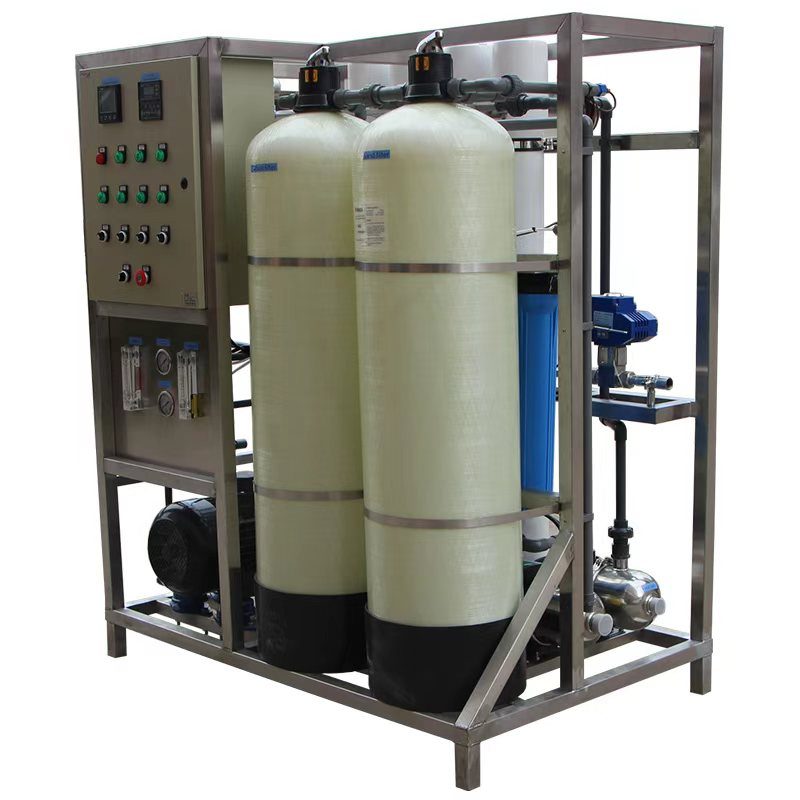
BiAGUA vs Electric Water Purifier 1. Purification Powered by Sunlight BiAGUA uses solar evaporation and condensation to produce high-purity distilled water. Its core purification process requires no electricity, motors, pumps, filter cartridges, RO membranes, or antiscaling chemicals. 2. Steam Chambers Designed for High Purity The vertical distance between the water surface and each vapor-conduit inlet provides space for liquid droplets to separate from the vapor. Adequate steam-chamber height helps reduce the carryover of splashes and droplets containing dissolved impurities, contributing to distilled-water purity. 3. Thermal Protection Against Microorganisms Thermal distillation combines heating with evaporation and condensation, providing an effective barrier against bacteria and viruses. 4. Lasting Purity Without Dependence on Filter Media BiAGUA produces high-purity distilled water through evaporation and condensation. Unlike conventional purifiers that depend on replaceable filters or RO membranes, its core purification process requires no filtration media or antiscaling chemicals. This avoids the recurring cycle of declining purification performance as filter media become saturated or exhausted, followed by recovery through cleaning or replacement. Stable high purity comes from the separation principle of distillation itself. 5. Less Contact with Plastics Glass tubes, stainless steel vapor conduits, and a stainless steel condenser reduce plastic contact along the main distillation path. Producing pure water on site also helps reduce dependence on bottled water and plastic packaging. 6. Distilled Water and Hot Water Together BiAGUA recovers the heat released during condensation to warm domestic water, while collecting distilled water separately. The same collected solar heat serves two purposes in sequence: water purification and domestic water heating. 7. No Wastewater — Daily Self-Flushing RO purifiers can send several glasses of wastewater down the drain for every glass of purified water produced. BiAGUA instead puts the remaining water to use as domestic hot water, avoiding a separate wastewater stream during normal operation. Whenever hot water is used, water carrying concentrated impurities flows out and fresh water enters—washing the system from within through everyday use. This daily flushing helps carry away contaminants, including dissolved minerals, and limit their accumulation. 8. Lower Recurring Costs Sunlight supplies the process energy, while the absence of replacement purification cartridges, RO membranes, and antiscaling chemicals reduces ongoing consumable expenses. On-site production also helps reduce spending on purchased drinking water and deliveries. 9. Passive Design for Long-Term Service The core process operates near atmospheric pressure without motors, pumps, or electronic control circuits. Fewer moving parts and powered components mean fewer potential failure points. 10. Quality You Can See At night or early in the morning, draw off all collected distilled water and wait for the last drops to fall, then check whether any further drops appear at the outlet. A dry outlet is a visible sign that source water is not crossing into the distilled-water path, giving you greater confidence in the system’s operation the next day. 11. Greater Everyday Independence By producing distilled-quality pure water and domestic hot water on site, BiAGUA helps households reduce dependence on electricity, replacement consumables, and purchased drinking water.
| Use | Annual Output | Avg/day |
|---|---|---|
| Distilled Water | - | - |
| Hot Water 25°C → 55°C | - | - |
Reliable distilled water and solar-heated water for guest rooms, kitchens, laundry, wellness areas, and daily hospitality operations.
Cleaner water and solar-heated water support for rural operations, equipment cleaning, processing, and agricultural facilities.
Clean distilled water and solar-heated water for healthier daily living in homes, cabins, and remote residential environments.
Cleaner water and solar-heated water for cooking, beverages, food preparation, cleaning, and commercial kitchen operations.
Solar-driven distilled water and hot water support for industrial cleaning, maintenance, processing, and workshop operations.
Distilled water and solar-heated water support for off-grid homes, isolated housing, and remote living environments.
Use sunlight to help convert salty or brackish water into cleaner distilled water together with usable hot water.